
Cognitive Flexibility and Adaptation to Change
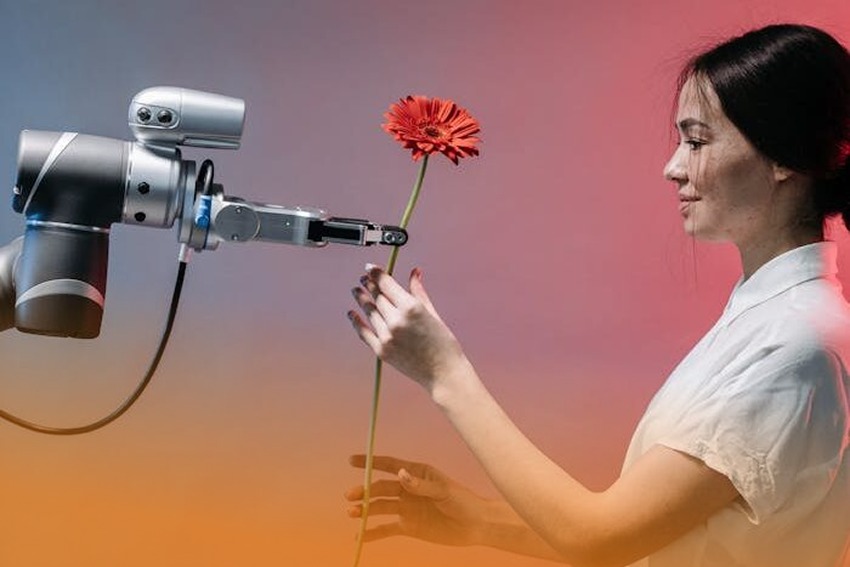
Your team just learned about the introduction of a new AI tool. Some are excited, others are blocked by fear or frustration. The issue isn’t the technology—it’s the ability to adapt.
Technological change doesn’t hurt by itself. What hurts is lack of preparation. It’s the sudden cognitive leap that our habits and mental structures are not ready to accommodate.
According to the WEF Future of Jobs Report (2025), by 2030, 59% of employees will need significant reskilling to meet changing competency requirements. The fastest-growing skills will include both technological abilities and so-called human skills—cognitive capacities and collaboration. Ultimately, this will be a test of mental agility.
📌 Why is it important to understand cognitive flexibility when working with AI?
In the workplace:
- Cognitive rigidity leads to resistance to innovation and decision paralysis.
- Anxiety about AI often masks deeper fears of losing control or professional identity.
- Teams with high flexibility adapt better to change and learn new solutions faster.
📊 What does research show?
Frankiewicz & Chamorro-Premuzic (2020): The best way to make organizations more digital and data-driven is to invest in people with the highest adaptability, curiosity, and flexibility. This means choosing individuals with high learnability, aligning their interests with needed skills, and accepting that specific hard skills quickly become outdated—the key is maintaining their curiosity.
TalentLMS (2024): 88% of managers believe that adopting a growth mindset is crucial for business success. Yet, just over half of employees feel their leaders demonstrate this mindset in daily practice.
📌 How to develop cognitive flexibility and move from resistance to curiosity?
- Recognize resistance before judging it
Fear of technology often hides under rational arguments: “this isn’t needed,” “it doesn’t work.” Learn to decode it and shift attention from defensiveness to exploration. - Practice perspective switching
The ability to move from “I must be an expert” to “I’m learning anew” is a key cognitive muscle of the 21st century. In the module, you’ll learn tools to work with beliefs and internal narratives. - Use AI as a reskilling partner
AI can be a source of anxiety—but also a personal learning assistant. We’ll show you how to treat AI tools as catalysts for innovative thinking, not threats. - Create micro-habits of flexibility
Daily actions—reading outside your cognitive bubble, changing tools, embracing uncertainty—build flexibility the way training builds muscles.
🧭 Adaptation is not surrender. It’s the skill of thriving in change.
In a world that evolves faster than our educational and organizational cultures, cognitive flexibility is a foundation not only for efficiency but also for psychological well-being.
🎓 Do you want to learn how to work with resistance to technology and develop lifelong learning skills?
Join the module “Cognitive Flexibility and Adaptation to Change.”
You will learn:
- how to recognize and work through fear of technology,
- how to develop cognitive flexibility, cultivate a hungry mind, and curiosity,
- how to support yourself and others in reskilling processes,
- how to use AI as a tool for creative thinking.
👉 If you lead a team, are learning new tools, or feel overwhelmed by technology—this module is for you.
Change is not the end. It’s the beginning.
📚 Sources and research:
World Economic Forum (2025). The Future of Jobs Report 2025. Geneva: WEF.
Frankiewicz, B. & Chamorro-Premuzic, T. (2020). Digital transformation is about talent, not technology. Harvard Business Review.
Arora, N. (2024, November 26). How a growth mindset unlocks confidence and adaptability amid rapid business change. Forbes Technology Council.
🔔 Sign up before the next change surprises you.
This module will be led by Dr. Anna Syrek-Kosowska and Dr. Paweł Fortuna.